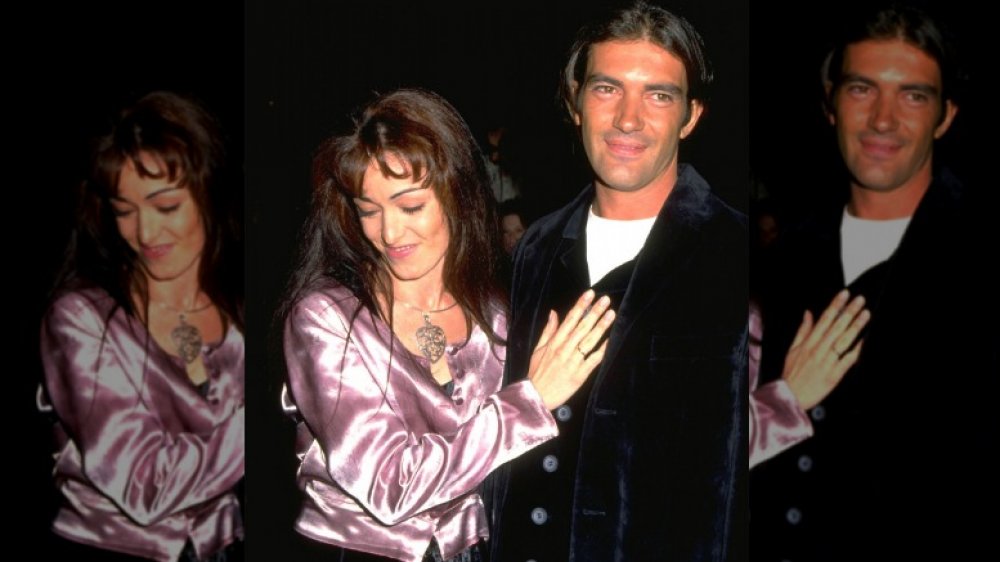
Ana Leza — The Woman Behind the Curtain of Spanish Cinema
There’s something quietly compelling about Ana Leza’s story. She’s not someone who chased fame relentlessly or worked every angle to stay in the headlines. She showed up, did her work, loved deeply, and then — when the noise got too loud — she simply walked away from it all. That kind of choice is rare, especially in the world of entertainment. And yet, here we are, still talking about her.
Most people come across Ana Leza’s name through a single connection: she was married to Antonio Banderas. And while that’s not inaccurate, it’s also an unfair reduction of a woman who had her own career, her own identity, and her own very deliberate path through life. This article is an attempt to tell that fuller story.
Quick Bio Table — Ana Leza at a Glance
| Detail | Info |
| Full Name | Ana Arana Leza |
| Date of Birth | January 1, 1962 |
| Place of Birth | Madrid, Spain |
| Nationality | Spanish |
| Ethnicity | Hispanic/Spanish |
| Religion | Spiritual (Siddha Yoga practitioner) |
| Height | 5 feet 4 inches (162 cm) |
| Weight | 65 kg (143 lbs) |
| Eye Color | Brown |
| Hair Color | Dark Brown |
| Mother | Concha Leza (also known as Conchita Leza Núñez) — Spanish actress |
| Father | Not publicly disclosed |
| Profession | Former Actress |
| Active Years | 1984 – mid 1990s |
| First Husband | Antonio Banderas (married 1987, divorced 1996) |
| Second Husband | Dharma Villareal (married November 26, 2000 — present) |
| Children | Two daughters — Clara María Villareal and Sofia Macarena Villareal |
| Net Worth | Estimated $100,000 (personal); received $4 million Madrid home + €12,000/month alimony in divorce settlement |
| Current Residence | South Fallsburg, New York, USA |
| Social Media | None |
Growing Up in Madrid — A Family Rooted in the Arts
Ana was born on January 1, 1962, in Madrid, Spain, into a household where acting wasn’t just a career option — it was the air everyone breathed. Her mother, Concha Leza (full name María de la Concepción Leza Núñez), was a well-regarded Spanish actress who worked consistently in Spanish television and film for decades. If you look up Concha Leza’s own filmography, you’ll find performances in productions like Hospital Central and several Spanish television staples that were household names in Spain.
Growing up around that kind of environment shapes you. Ana didn’t just stumble into acting — she was immersed in it from childhood. She watched her mother prepare for roles, listened to discussions about scripts and characters, and absorbed an understanding of storytelling that most aspiring actors spend years trying to learn in drama school. Madrid in the 1960s and 70s was a city in transition — politically and culturally — and the arts scene was finding its voice in ways that would later explode into a full-blown cultural renaissance by the 1980s. Ana grew up right in the middle of that energy.
Her father’s identity has never been publicly shared, which is a choice the family has clearly made and maintained. What we do know is that the creative influence in her life came strongly from her mother’s side, and Ana followed that path with genuine intent.
Her Acting Career — More Than a Footnote
Before any marriage, before the celebrity world took notice, Ana Leza was building something of her own. She started out in regional theater, traveling across Spain from Andalusia to Catalonia, performing live in front of audiences night after night. That kind of work — repetitive, unglamorous, without cameras — builds an actor from the inside out.
Her transition to film came in the mid-1980s. She appeared in Fragmentos de interior in 1984, which gave her early screen experience in Spanish independent cinema. Then came El placer de matar in 1988, a film that showed her willingness to take on darker, more complex material.
But the project that placed her on a bigger map was Pedro Almodóvar’s Mujeres al borde de un ataque de nervios — or as international audiences know it, Women on the Verge of a Nervous Breakdown — released in 1988. That film became one of the most celebrated Spanish movies ever made. It earned an Academy Award nomination for Best Foreign Language Film and introduced the world to a specific, vibrant, chaotic version of Spanish womanhood. Ana had a role in it — not the lead, but she was part of that creative universe. Being in an Almodóvar film during that period was a statement in itself.
She also appeared in Of Love and Shadows (1994), starring opposite Jennifer Connelly and Antonio Banderas, and had a small appearance in the Tom Hanks film Philadelphia (1993). These weren’t starring roles, but they showed range and they showed that Ana was a genuine working actress, not just a face that appeared briefly and disappeared.
People who worked with her during that period described her as someone who was unafraid of quiet moments on screen. In a world where actors sometimes overperform to fill the silence, Ana understood that sometimes stillness says more. That’s a skill, and it doesn’t come from nowhere.
Meeting Antonio Banderas — When Two Worlds Collided
By the mid-1980s, Antonio Banderas was becoming the face of a new Spanish cinema. Almodóvar had discovered him, cast him in multiple films, and the industry was starting to pay close attention. He was young, magnetic, and ambitious in the way that people are when they sense something bigger is coming.
Ana and Antonio met in 1986. By most accounts, it was immediate — the kind of connection that bypasses all the normal social filtering. They married on July 27, 1987, at the Church of San Nicolas in Madrid. It was a high-profile union by Spanish celebrity standards, and the press treated them as a power couple representing the finest of what Spanish cinema was producing.
The next chapter of their story moved to Hollywood. When Banderas began making his transition into American film in the early 1990s — a move that would eventually lead to roles in Philadelphia, Interview with the Vampire, Desperado, and Evita — Ana was right there with him. And critically, she was doing more than just accompanying him. She helped him learn English.
That detail matters more than it might seem at first glance. Learning a language well enough to act in it — to convey emotion, to land comedic timing, to cry convincingly — is brutally hard. It’s not just vocabulary and grammar. It’s rhythm, it’s instinct, it’s hearing yourself think differently. Ana, who had developed her own strong English, became his language partner and cultural guide during that transition. Banderas himself has spoken with gratitude about the support he received during those early Hollywood years. That support had a name: Ana Leza.
The Divorce — What Actually Happened
By 1996, the marriage was over. After nine years together, Ana Leza and Antonio Banderas divorced. The public narrative around the split was immediately dominated by what came next: Banderas began a relationship with American actress Melanie Griffith almost immediately, and they married the same year the divorce was finalized.
That kind of timing understandably made the story messier in the press than any of the people involved probably wanted. Ana was suddenly in a position no one particularly envies — her nine-year marriage ending publicly, with a famous successor waiting in the wings.
The divorce settlement reportedly gave Ana their Madrid home, valued at approximately $4 million, along with monthly alimony payments of €12,000 (roughly $14,100) for three and a half years. By most measures, the financial arrangement was significant. But Ana’s response to the whole experience was less about the settlement and more about a fundamental shift in direction.
She stepped back from acting. She stepped back from public life. And she began quietly rebuilding.
A New Life — Meditation, Dharma Villareal, and Starting Over
The path that Ana took after the divorce wasn’t the conventional one. She didn’t throw herself into a comeback role or do the celebrity circuit to stay relevant. Instead, she found her way to Siddha Yoga meditation, a spiritual practice that clearly gave her something the film world hadn’t.
It was through this practice — at the Siddha Yoga Meditation Center — that she met Dharma Villareal. Born Christopher Lee Villareal, Dharma is an American editor and documentary filmmaker who grew up in Ojai, California, to Mexican immigrant parents. His career has included work as an assistant editor on projects including the early Mighty Morphin Power Rangers series, and he has worked as a documentary filmmaker and editor for Xerox.
He is, by any measure, the opposite of Antonio Banderas in terms of public profile. He’s not famous. He doesn’t court attention. He works behind the camera, in the quiet mechanics of storytelling, not in front of it.
Ana and Dharma married on November 26, 2000, in an intimate ceremony in Santa Barbara, California. Spanish actress Carmen Maura — one of Almodóvar’s most iconic collaborators — was present as a witness, a subtle thread connecting Ana’s past life in Spanish cinema to this quieter new beginning.
Together they have two daughters. The older is Clara María Villareal, also known by her spiritual name Clara Priya Villareal. The younger is Sofia Macarena Villareal, also known as Sofia Sindhu Villareal. The dual names — one Spanish, one tied to their spiritual tradition — tell you something about the household these girls were raised in. It’s bicultural, thoughtful, and not interested in fitting neatly into a single box.
The family has lived across multiple cities and countries over the years — Madrid, Los Angeles, Abu Dhabi — before settling in South Fallsburg, New York, which is home to a significant Siddha Yoga community.
Ana Leza and Antonio Banderas — Revisiting the Legacy
It’s worth pausing for a moment on what the relationship between Ana and Antonio actually produced, beyond the headlines.
When Banderas first arrived in Hollywood, he was talented but navigating a completely foreign terrain — culturally, linguistically, and professionally. Ana was there every step of the way. She helped him learn English at a level where he could perform in it. She helped him understand American culture from the inside. She provided the kind of daily, intimate support that doesn’t show up in any film credits but absolutely shows up in outcomes.
The roles that made Banderas a household name — the ones that came in the early-to-mid 1990s — were built on a foundation that included a very real contribution from his then-wife. Whether that contribution is credited or not is almost beside the point. People who were close to the situation understood it, and Banderas himself has not been ungracious about acknowledging it.
Their relationship also placed two talented Spanish artists at the center of a particular moment in Spanish cinema — a moment when directors like Almodóvar were being taken seriously internationally for the first time, when Spanish actors were crossing over into American productions, and when the cultural exchange between Spain and Hollywood was just beginning to accelerate. Ana and Antonio were part of that wave together.
Where Is Ana Leza Now?
Ana Leza today lives a deliberately private life. She has no public social media presence, does not give interviews, and has maintained a consistent distance from the entertainment world she once inhabited. She and Dharma Villareal have been married for over two decades now — which, in any context, is a testament to something working.
Her daughters are growing up in that dual-identity environment of Spanish heritage and American life, shaped by their parents’ commitment to spiritual practice and to a life that prioritizes depth over visibility.
Her net worth is estimated at around $100,000 in personal assets, though this figure is hard to verify given how private she is. It’s worth noting that this number likely doesn’t fully reflect the financial security that came from the divorce settlement — the property and alimony alone were substantial — but Ana has never been publicly oriented toward wealth or status.
What you get when you look at Ana Leza’s life as a whole is a portrait of a woman who made real choices rather than default ones. She had access to the kind of life that many people assume is the goal — fame, a famous husband, international recognition — and she looked at it clearly and decided it wasn’t actually what she wanted. Then she went and built something else.
Her Films — A Quick Look
Ana Leza’s filmography is relatively short, but each entry has something worth noting:
Fragmentos de interior (1984) — Her early film work, part of the Spanish independent cinema scene of the mid-80s.
El placer de matar (1988) — A darker thriller that showed her willingness to take on challenging material.
Women on the Verge of a Nervous Breakdown (1988) — The Almodóvar film that became an international phenomenon. Being part of this project at all was significant.
Philadelphia (1993) — A small appearance in Tom Hanks’ Oscar-winning film, notable for how it crossed her into American cinema briefly.
Of Love and Shadows (1994) — A Spanish-Argentine production starring Antonio Banderas and Jennifer Connelly, set against the backdrop of a South American dictatorship. Ana appeared alongside her then-husband in this film.
What Her Story Actually Tells Us
Ana Leza’s life doesn’t follow a traditional celebrity arc. There’s no big comeback, no reality television appearance, no carefully managed social media rebrand. What there is, instead, is a woman who did her work in the arts with real skill, contributed substantially to someone else’s success without demanding credit for it, survived a very public divorce with her dignity intact, and then rebuilt her life around the things that actually mattered to her.
That’s not a small thing.
In a cultural moment that tends to reward visibility above almost everything else, the choice to simply live — to raise children, practice meditation, stay married to someone who doesn’t seek the spotlight — reads almost as countercultural. And maybe that’s part of what makes Ana Leza’s story compelling to people who find it. She’s proof that you can exit the machine without it being a tragedy.
Her mother, Concha Leza, had a long career in Spanish entertainment. Her daughters are being raised with their own identities and their own paths to figure out. And Ana, somewhere between Madrid and New York, between who she was and who she chose to become, seems to have found what she was looking for.